
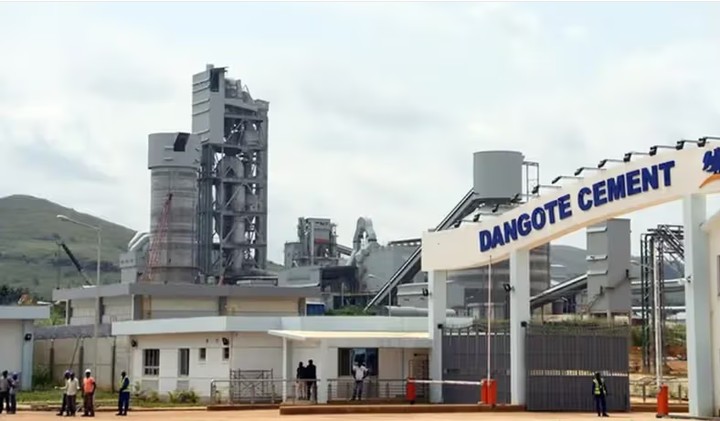
Senegal Takes Strategic Stake in Dangote Cement: What the 10% Government Ownership Means for Africa’s Industrial Future
The Senegalese government has officially acquired a 10 per cent equity stake in Dangote Cement Senegal, a development that signals a deeper partnership between public institutions and private industry in one of West Africa’s most important manufacturing sectors.

Akahi News gathered that the move, disclosed in Dangote Cement’s 2025 annual report, reduces the parent company’s direct ownership of the Senegal subsidiary from 99.99 per cent to 89.99 per cent. The transaction effectively positions the Senegalese government as a minority shareholder in the cement manufacturing giant’s Dakar-based operations.
Observers say the development reflects a broader economic pattern emerging across Africa, where governments increasingly acquire minority stakes in strategic industries to strengthen regulatory influence while still allowing private companies to maintain operational control.
But beyond the numbers lies a deeper question: what does this partnership reveal about the evolving relationship between African governments and industrial capital?
Understanding the Stake Acquisition
According to financial disclosures reviewed by Akahi News, the Senegalese government’s new stake represents a deliberate attempt to increase its participation in sectors that are central to national economic development.
Cement production remains one of the most important pillars supporting infrastructure development, urban housing expansion, and large-scale construction projects across the African continent.
By owning a portion of Dangote Cement Senegal, the government gains more than financial dividends. It also gains a stronger voice in conversations about production priorities, investment strategies, and the long-term direction of the industry.
Industry analysts believe this type of arrangement allows governments to align corporate activity with national development goals without undermining the efficiency that private sector management often brings.
Yet a philosophical question emerges: can government participation strengthen industrial growth without stifling innovation and competition?
Revenue Decline Raises Market Concerns
The equity acquisition comes at a moment when Dangote Cement Senegal is facing measurable market pressures.
Financial figures examined by Akahi News show that the company’s revenue declined from NGN192.2 billion in 2024 to NGN151 billion in 2025. This represents a 21.4 per cent drop, suggesting changing dynamics within Senegal’s construction and building materials market.
Sales volumes also fell significantly during the same period.
Total cement sales declined by 19.8 per cent to roughly 1.2 million tonnes for the year, pointing to weaker construction activity and softer demand in the local market.
Economic observers suggest that a combination of global economic pressures, shifting construction cycles, and operational costs may have contributed to the slowdown.
This raises another broader question worth reflecting upon: when industrial demand weakens, should governments intervene more actively, or should market forces be allowed to self-correct?
Dangote Cement’s Strategic Role in Senegal
Since beginning operations in Senegal in 2015, Dangote Cement Senegal has grown into one of the country’s most influential industrial operations.
Akahi News learnt that the company has contributed significantly to employment generation and industrial development within the country.
Thousands of Senegalese workers are connected to the plant either directly through manufacturing roles or indirectly through logistics, distribution networks, and supply chains linked to cement production.
The facility currently operates with an installed production capacity of 1.5 million tonnes annually, making it one of the most important industrial assets within Senegal’s construction ecosystem.
Beyond serving domestic demand, the plant also exports cement to neighbouring West African markets, contributing to regional trade and economic integration.
This regional influence raises an important reflection for policymakers: should strategic industrial assets remain entirely in private hands, or does partial government ownership provide a more balanced path forward?
Government Strategy in Strategic Sectors
The Senegalese government’s move appears to form part of a wider strategy aimed at strengthening national participation in sectors considered vital to long-term economic growth.
Across Africa, governments are gradually recognising that industries such as cement, energy, telecommunications, and transportation infrastructure play central roles in shaping economic stability.
By acquiring minority stakes in these sectors, states aim to secure economic returns while also maintaining a strategic presence in industries that shape national development.
According to analysts who spoke with journalists, the arrangement could help balance profit-driven corporate objectives with public development priorities.
But this evolving model also prompts a deeper philosophical reflection.
If governments become shareholders in key industries, can they remain neutral regulators? Or will their dual role as investor and policymaker introduce new complexities into economic governance?
Cement Industry and Africa’s Infrastructure Future
Cement production remains one of the foundational drivers of infrastructure growth across Africa.
From highways and bridges to schools, hospitals, and residential housing, cement forms the backbone of the continent’s development ambitions.
Akahi News gathered that Senegal’s construction sector continues to be supported by public infrastructure programmes and rapid urban expansion, both of which require steady cement supply.
With the government now holding an ownership stake in Dangote Cement Senegal, policymakers may gain greater influence in shaping production priorities that support national infrastructure projects.
At the same time, the company retains the technical expertise and operational capacity that have enabled it to remain a major player in Africa’s cement industry.
This partnership could therefore represent a model for future public–private collaboration across the continent.
But one final question lingers: is this the beginning of a new era in African industrial policy where governments become co-investors in strategic industries?
Conclusion: A Partnership with Regional Implications
The Senegalese government’s acquisition of a 10 per cent stake in Dangote Cement Senegal marks more than a financial transaction. It represents a strategic shift in how African governments may engage with private industry in the pursuit of economic development.
While Dangote Cement continues to maintain operational leadership within the company, the state’s participation introduces a new dimension of policy influence and economic partnership.
Whether this model strengthens industrial growth or creates new governance challenges will depend on how effectively both parties manage the balance between public interest and corporate efficiency.
For now, the deal reflects an evolving African economic landscape — one where governments are increasingly seeking not only to regulate industries, but also to participate directly in them.
As the continent continues its journey toward industrialisation, the relationship between state institutions and private capital may well determine the pace and direction of Africa’s economic transformation.
For deeper analysis on African economic trends, policy developments, and major business stories shaping the continent, stay connected with Akahi News.
By Joseph Iyaji | Akahi News
Joseph Iyaji is a journalist, educator, and founder of Akahi G. International, Akahi Tutors, and Akahi News. Read more about him here https://akahinews.org/Joseph/
🎓 Attend 2026 JAMB, Post-UTME, WAEC, and NECO GCE Tutorials
Get fully prepared with expert tutors, comprehensive study materials, and personalised academic guidance at Akahi Tutors.
📍 Located at 67, Oduduwa College Road, Off Sabo Junction, Ile-Ife.
📞 Call: 08038644328
for enrollment and accommodation reservation.