US Report Flags Minimum Wage, Child Marriage, and Human Rights Violations in Nigeria
By Joseph Iyaji | Akahi News
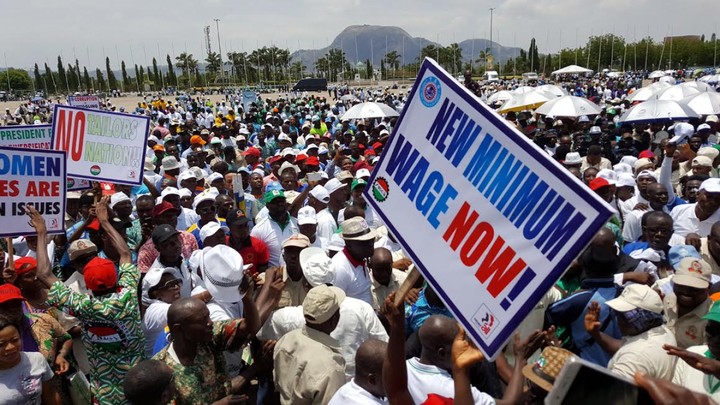
The United States has raised fresh concerns over Nigeria’s socio-economic and human rights landscape, noting that the recently approved national minimum wage of ₦70,000 ($47.9) has already been undermined by the sharp devaluation of the Naira, alongside persistent governance and human rights challenges.

In its Country Reports on Human Rights Practices for 2024, released by the US Department of State, Bureau of Democracy, Human Rights, and Labour, Washington painted a sobering picture of the difficulties confronting Nigerian workers and citizens in general.
Minimum Wage Loses Value Amid Inflation and Devaluation
The report explained that while the National Minimum Wage (Amendment) Act 2024 doubled the minimum wage to ₦70,000 for employees of public and private organisations with 25 or more workers, the impact has been largely negated by the Naira’s steep depreciation, now trading at over ₦1,500/$1.
It stated:
“Despite the increase, currency devaluation meant the minimum wage was no longer higher than the poverty income level. Many employers had fewer than 25 employees, so most workers were not covered.”
The report further noted that several state governments have failed to implement the law, citing financial constraints. In addition, the legislation excluded seasonal agricultural workers, part-time staff, and commission-based employees, leaving a significant portion of the workforce unprotected.
Although the Act mandates a 40-hour workweek, paid annual leave, and overtime pay, enforcement remains weak. The report stressed that penalties for non-compliance were low and not commensurate with the gravity of violations, effectively rendering the law toothless in many cases.
According to the US assessment, 70–80 percent of Nigeria’s workforce operates in the informal economy, where wage and occupational safety regulations are rarely enforced.
Early and Forced Marriages Persist
The report also turned attention to child marriage practices, despite federal law setting the minimum age for marriage at 18 years for both boys and girls. It observed that while 35 states, excluding Zamfara, adopted the law, many northern states continued to sidestep the requirement under customary and religious laws.
“In some states, children as young as 11 could be legally married,” the report noted, warning of the health risks and long-term implications for child rights and education.
The US disclosed that Nigerian authorities have been working with traditional and religious leaders—including emirs and sultans—to raise awareness on the dangers of child marriage.
Arbitrary Arrests, Detentions, and Judicial Delays
On human rights enforcement, the report highlighted disturbing patterns of arbitrary arrests, prolonged detentions, and lack of judicial accountability. Citing Amnesty International, it revealed that the whereabouts of “dozens of young men detained at SARS Awkuzu” in Anambra State remain unknown years after the controversial police unit was disbanded in 2020.
It also criticised Nigerian law enforcement agencies for detaining suspects without warrants, often denying access to family members or legal representation. Although the constitution stipulates that detainees must be brought before a magistrate within 48 hours, the report found that in many cases, the law was ignored.
“Some detainees were held in pretrial detention for periods equal or exceeding the maximum sentence for the accused crime. The shortage of trial judges, trial backlogs, endemic corruption, bureaucratic inertia, and undue political influence seriously hampered the judicial system,” the report stated.
The document further pointed out that cases were frequently delayed due to lack of vehicles to transport detainees to court, while others languished in custody because authorities lost their case files.
A Broader Call for Reforms
The report underscores the deepening socio-economic and human rights challenges confronting Nigeria. From the erosion of workers’ purchasing power to the persistence of child marriage and the failures of the judicial system, the findings reflect long-standing governance gaps that demand urgent reforms.
Analysts say the report, though external, mirrors the concerns of local civil society groups who have consistently called for stronger institutional enforcement, transparency in governance, and a people-centred approach to policymaking.
As Nigeria grapples with economic turbulence and heightened public discontent, the revelations in the US human rights report are expected to intensify debates about the government’s commitment to safeguarding workers’ welfare and protecting fundamental freedoms.
🎓 Attend 2026 JAMB, Post-UTME, WAEC, and NECO GCE Tutorials
Get fully prepared with expert tutors, comprehensive study materials, and personalised academic guidance at Akahi Tutors.
📍 Located at 67, Oduduwa College Road, Off Sabo Junction, Ile-Ife.
📞 Call: 08038644328
for enrollment and accommodation reservation.
Akahi News http://www.akahinews.org
Leave a Reply