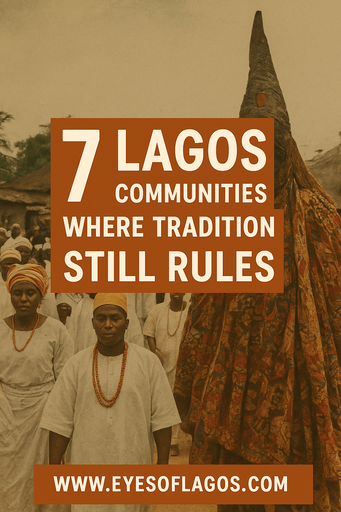
Where Tradition Meets Modernity: Seven Lagos Communities Keeping Nigeria’s Cultural Heart Alive
By Eyes of Lagos
When most people picture Lagos, they imagine the frenetic energy of a mega-city — endless traffic jams, glittering skyscrapers, pulsating nightlife, and the never-ending hustle. But behind the glass towers and the blaring horns lies another Lagos — one that still dances to the timeless rhythms of its past.
Beneath the surface of Nigeria’s economic capital, there are pockets of communities where modern life brushes shoulders with centuries-old traditions. These places are not frozen in time, but they hold fiercely to their heritage, preserving customs, languages, and festivals that have endured through generations.
From fishing towns to historical strongholds, here are seven Lagos communities where Nigerian tradition not only survives but thrives.

1. Epe – The Home of Festivals and Fish Markets
Epe may be known to visitors for its bustling fish markets, but culture lovers know it as a treasure trove of Yoruba heritage. Here, the Kayokayo Festival stands as a cultural highlight, drawing celebrants from near and far to honor the town’s Islamic heritage alongside its traditional Yoruba identity.
Fishing, a way of life for generations, is still practiced using techniques passed down through families. The reverence for traditional rulers remains strong, and communal celebrations bring together both young and old in a vivid display of unity.
2. Badagry – Where History Lives
Steeped in history, Badagry is a living reminder of Nigeria’s past. Once a critical point in the transatlantic slave trade, the coastal town now honors its heritage through the Badagry Festival, a blend of history, music, dance, and masquerade performances.
Its cobblestone paths and colonial relics whisper stories of the past, while its people keep alive rituals that have defined the community for centuries. Badagry doesn’t just remember history — it relives it.
3. Isale Eko – The Heart of Old Lagos
In the heart of Lagos Island lies Isale Eko, a place where the Eko Yoruba dialect still rings through the streets and palaces. The Eyo Festival, with its white-clad masqueraders and colorful pageantry, remains one of Lagos’ most iconic cultural events, attracting visitors from across the globe.
Here, tradition isn’t an occasional spectacle — it’s woven into the everyday life of the people, from chieftaincy ceremonies to local storytelling traditions.
4. Ikorodu – The Spirit of Agemo and Oro
Ikorodu is a rapidly developing hub, but in many of its neighborhoods, the beat of tradition is still strong. Festivals like Oro and Agemo continue to mark the cultural calendar, paying homage to ancestral spirits and strengthening community bonds.
Despite the influx of modern influences, Ikorodu’s residents hold fast to rituals that have shaped their identity for centuries.
5. Ejinrin – The Town of Sacred Customs
Often overlooked on the cultural map of Lagos, Ejinrin remains fiercely protective of its traditions. Sacred shrines, communal fishing customs, and spiritual rites are safeguarded by elders who act as cultural gatekeepers.
This hidden gem offers a glimpse into Lagos’ quieter, more spiritual side — a place where the weight of history is carried with pride.
6. Agege – Little Lagos of Old
To many, Agege is synonymous with its beloved bread, but it is also a cultural stronghold. Descendants of early settlers keep Yoruba traditions alive through vibrant Egungun festivals, where streets pulse with the sound of drums, chants, and swirling masquerade costumes.
These celebrations are more than entertainment — they are acts of remembrance, honoring ancestors and keeping stories alive for the next generation.
7. Ojo – The Custodians of Heritage
Ojo is a blend of old and new, where royal traditions and modern life coexist. The Oniba of Iba remains a respected cultural leader, and his royal ceremonies are rich with rituals handed down over centuries. Annual festivals in Ojo are not just local events — they are affirmations of cultural pride.
Keeping the Flame Alive
Lagos may be Nigeria’s beating economic heart, but in these communities, culture is the lifeblood. They show that tradition is not a relic to be kept behind glass but a living force — spoken in native tongues, danced in vibrant costumes, and celebrated in the open streets.
🎓 Attend 2026 JAMB, Post-UTME, WAEC, and NECO GCE Tutorials
Get fully prepared with expert tutors, comprehensive study materials, and personalised academic guidance at Akahi Tutors.
📍 Located at 67, Oduduwa College Road, Off Sabo Junction, Ile-Ife.
📞 Call: 08038644328
for enrollment and accommodation reservation.
For travelers and locals alike, these places offer more than just sightseeing; they offer immersion into the enduring spirit of Nigeria — a reminder that even in the busiest city, the drumbeat of tradition never truly fades.
Leave a Reply